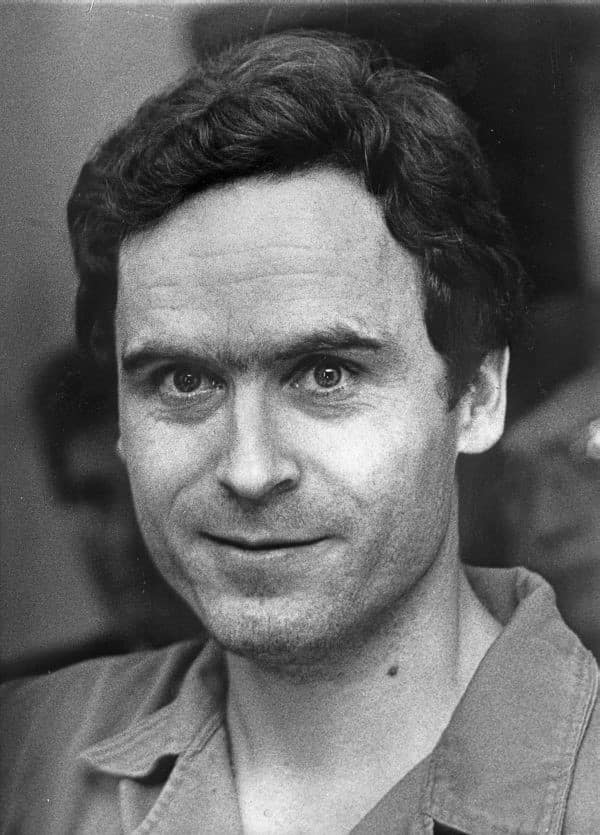
Ted Bundy Polygraph Test: The Truth Behind the Myth

Did Ted Bundy really pass a polygraph? We examine the two primary sources — Ann Rule and John Henry Browne — to debunk this persistent myth.

Published November 13, 2025 Updated July 24, 2026 38 min read All articles

Did the infamous killer really beat the machine? Separating myth from fact, this look at Ted Bundy's testing reveals what a lie detector test can and can't do.

Contrary to widespread belief, the evidence strongly suggests Ted Bundy did not pass a lie detector test. Two primary sources — Ann Rule's landmark book and defense attorney John Henry Browne's memoir — provide the only documented accounts of Bundy's interaction with polygraph testing. This investigation examines every available source to separate fact from fiction.

FAILEDBundy's Polygraph Result
30+Confirmed Victims
2Primary Sources
1970sEra of Events

TL;DR — The Short Version

  • Bundy failed — Defense attorney John Henry Browne confirmed in his 2016 memoir that he arranged a polygraph for Bundy, and Bundy failed it, though a contradictory 2000 newspaper account quotes Browne saying Bundy passed.
  • No law enforcement polygraph — Police and criminal investigators never administered a polygraph examination to Bundy during any investigation.
  • Ann Rule's account — In 'The Stranger Beside Me,' Rule recounts Bundy declining a polygraph on his lawyer's advice, suggesting awareness of risk.
  • Browne's 2016 memoir — In 'The Devil's Defender,' Browne wrote that Bundy claimed his 'personality type' could fool the machine and called it 'just a game.'
  • Psychopaths and polygraphs — Research by Patrick & Iacono (1989) found that guilty psychopaths were detected just as easily as guilty nonpsychopaths at an 87% rate.
  • The myth persists — Documentaries, podcasts, and internet claims continue to spread the false narrative, but primary sources tell a different story.
  • Polygraph accuracy — The APA's 2011 meta-analysis found an aggregated decision accuracy of 89% for single-issue tests across 38 qualifying studies.

Who This Guide Is For

  • True crime enthusiasts seeking accurate information about Ted Bundy and lie detection
  • Students studying criminal psychology, forensic science, or polygraph history
  • Journalists and content creators looking for sourced facts about the Bundy polygraph claim
  • Anyone preparing for a polygraph test who wants to understand how the technology actually works
  • Legal professionals interested in the intersection of criminal defense and polygraph testing
  • Polygraph examiners looking for case examples to reference in professional work

The Origin of the Bundy Polygraph Myth

How a False Claim Became Accepted 'Fact'

The notion that Ted Bundy — one of America's most notorious serial killers — successfully passed a lie detector test has become deeply embedded in popular culture. It surfaces in true crime documentaries, podcast discussions, social media threads, and casual conversations about whether psychopaths can "beat" the polygraph. The claim is typically presented as evidence of Bundy's extraordinary manipulative abilities: a man so skilled at deception that even a scientific instrument designed to detect lies could not catch him.

This claim is not supported by the primary source evidence. Theodore Robert Bundy (1946–1989) was an American serial killer who kidnapped, raped, and murdered dozens of young women and girls between 1974 and 1978 [1]Verified Ted Bundy
Confirms Bundy was born November 24, 1946, murdered dozens of women between 1974-1978, confessed to 30 murders in seven states, was executed January 24, 1989, and described himself as 'the most cold-hearted son of a bitch you'll ever meet.'
. He confessed to 30 murders in seven states, though some investigators believe the true number could be significantly higher [1]Verified Ted Bundy
Confirms Bundy was born November 24, 1946, murdered dozens of women between 1974-1978, confessed to 30 murders in seven states, was executed January 24, 1989, and described himself as 'the most cold-hearted son of a bitch you'll ever meet.'
[2]Verified Ted Bundy | Biography, Crimes, Death, & Facts
Confirms Bundy confessed to 30 murders, was convicted of three murders in Florida, and was executed in 1989.
. Bundy was executed in the electric chair at Florida State Prison on January 24, 1989 [1]Verified Ted Bundy
Confirms Bundy was born November 24, 1946, murdered dozens of women between 1974-1978, confessed to 30 murders in seven states, was executed January 24, 1989, and described himself as 'the most cold-hearted son of a bitch you'll ever meet.'
[3]Verified Serial killer Ted Bundy is put to death in the electric chair at Florida State Prison on January 24, 1989
Confirms Bundy's execution date of January 24, 1989, his confession to more than 20 murders, and biographical background.
. As recently as April 2026, DNA testing has continued to confirm additional Bundy victims, with 17-year-old Laura Ann Aime from a 1974 Utah cold case newly linked to his crimes through advanced forensic techniques [4]Verified New DNA testing links 1974 death of Utah teen to Ted Bundy
Confirms April 2026 DNA confirmation of Laura Ann Aime as Bundy victim in 1974 Utah cold case.
.

The myth appears to have originated from a combination of factors. Bundy cultivated an image of masterful deception during his trials and media appearances. The general public often conflated his social charm with an ability to deceive instruments. Furthermore, the actual details of Bundy's interaction with polygraph testing were not widely known until defense attorney John Henry Browne published his memoir in 2016 [5]Verified No, Ted Bundy Didn't Pass a Polygraph 'Test'
Confirms that Browne wrote in Chapter 2 of The Devil's Defender that he arranged a polygraph for Bundy and Bundy failed it, with direct quotes about personality type and 'just a game.' Also confirms Rule's account of Bundy declining a polygraph.
. By that time, the myth had enjoyed more than three decades of unchallenged circulation. Even prominent figures have perpetuated it — UFC fighter Daniel Cormier publicly claimed at UFC 220 in January 2018 that Bundy passed a polygraph test when dismissing Jon Jones' lie detector results [6]Verified DC unfazed by Jones' polygraph test: Serial killer Ted Bundy passed one, too
Confirms Daniel Cormier publicly perpetuated the myth that Bundy passed a polygraph at UFC 220 in January 2018.
.

Understanding how a polygraph actually works is essential to evaluating claims about anyone supposedly "beating" the test. The polygraph measures physiological responses — changes in blood pressure, respiration, skin conductivity, and other parameters — that occur in response to specific questions. The technology has a rich history stretching back more than a century, from the earliest experiments by Marston and Larson to the sophisticated instruments of today. For a thorough understanding of polygraph methodology and its evolution, see our complete polygraph history timeline.

Ann Rule's Account in 'The Stranger Beside Me'

A Personal Connection and a Telling Conversation

Ann Rule's relationship with Ted Bundy is one of the most remarkable coincidences in true crime history. Rule, a former Seattle policewoman turned crime writer, met Bundy while volunteering at a suicide crisis hotline center in Seattle in 1971 [7]Verified Ann Rule
Confirms Rule met Bundy while volunteering at a suicide crisis hotline in Seattle in 1971, her background as a former Seattle policewoman, and that she saw Bundy as 'kind, solicitous, and empathetic.'
. Bundy was a work-study psychology student at the University of Washington at the time [7]Verified Ann Rule
Confirms Rule met Bundy while volunteering at a suicide crisis hotline in Seattle in 1971, her background as a former Seattle policewoman, and that she saw Bundy as 'kind, solicitous, and empathetic.'
. Rule observed nothing disturbing in Bundy's personality during their time working together and described him as "kind, solicitous, and empathetic" [7]Verified Ann Rule
Confirms Rule met Bundy while volunteering at a suicide crisis hotline in Seattle in 1971, her background as a former Seattle policewoman, and that she saw Bundy as 'kind, solicitous, and empathetic.'
.

Her landmark book, "The Stranger Beside Me," first published in 1980, chronicles both her personal relationship with Bundy and the broader investigation into his crimes [8]Verified The Stranger Beside Me
Confirms the book was first published in 1980 with multiple revisions (1989, 2000, 2008) and chronicles Rule's personal relationship with Bundy.
. It has been revised and updated multiple times — with editions in 1989, 2000, 2008, and beyond — as new information emerged [8]Verified The Stranger Beside Me
Confirms the book was first published in 1980 with multiple revisions (1989, 2000, 2008) and chronicles Rule's personal relationship with Bundy.
. The book is considered one of the most definitive biographies of Bundy [7]Verified Ann Rule
Confirms Rule met Bundy while volunteering at a suicide crisis hotline in Seattle in 1971, her background as a former Seattle policewoman, and that she saw Bundy as 'kind, solicitous, and empathetic.'
.

In the book, Rule describes a conversation in which she suggested to Bundy that he take a polygraph test to clear his name. Rule wrote that she asked him why he didn't take a polygraph examination and get it over with [5]Verified No, Ted Bundy Didn't Pass a Polygraph 'Test'
Confirms that Browne wrote in Chapter 2 of The Devil's Defender that he arranged a polygraph for Bundy and Bundy failed it, with direct quotes about personality type and 'just a game.' Also confirms Rule's account of Bundy declining a polygraph.
. Bundy's response was telling — he told Rule that his lawyer, John Henry Browne, felt that declining the test was best [5]Verified No, Ted Bundy Didn't Pass a Polygraph 'Test'
Confirms that Browne wrote in Chapter 2 of The Devil's Defender that he arranged a polygraph for Bundy and Bundy failed it, with direct quotes about personality type and 'just a game.' Also confirms Rule's account of Bundy declining a polygraph.
.

This refusal is significant for several reasons. If Bundy truly believed he could pass a polygraph — as the myth suggests — there would have been strategic incentive to take one. A passed test, even though not typically admissible in court, could have helped shape public perception and given his defense team a strategic advantage. The refusal also shows his attorney's judgment: defense attorneys routinely advise clients against taking polygraph tests, particularly when they believe the client may be guilty.

The Significance of Rule as a Source

Ann Rule's credibility as a source on the Bundy case is exceptionally strong. She was not merely a journalist investigating from the outside — she had a direct, personal relationship with Bundy that spanned years [8]Verified The Stranger Beside Me
Confirms the book was first published in 1980 with multiple revisions (1989, 2000, 2008) and chronicles Rule's personal relationship with Bundy.
. Her background as a former Seattle policewoman gave her a practical understanding of investigative tools like the polygraph [9]Verified The Stranger Beside Me by Ann Rule
Confirms Ann Rule (1931-2015) wrote thirty-five New York Times bestsellers and was a former Seattle police officer.
. Rule wrote thirty-five New York Times bestsellers and is highly regarded for helping create the true crime genre as it exists today [9]Verified The Stranger Beside Me by Ann Rule
Confirms Ann Rule (1931-2015) wrote thirty-five New York Times bestsellers and was a former Seattle police officer.
.

Notably, Rule makes no mention in her book of Bundy ever actually sitting for a polygraph examination [5]Verified No, Ted Bundy Didn't Pass a Polygraph 'Test'
Confirms that Browne wrote in Chapter 2 of The Devil's Defender that he arranged a polygraph for Bundy and Bundy failed it, with direct quotes about personality type and 'just a game.' Also confirms Rule's account of Bundy declining a polygraph.
. The only polygraph-related detail she provides is Bundy's refusal to take one on his attorney's advice. For more on how polygraphs have been used throughout law enforcement history, including in high-profile criminal cases, see our detailed guide to polygraph history. The Chris Watts case provides another compelling example of how polygraph testing intersects with high-profile murder investigations.

John Henry Browne's Account in 'The Devil's Defender'

The Defense Attorney Who Arranged the Test

If Ann Rule's account raises questions about the myth, John Henry Browne's account provides the most direct evidence against it. Browne is an American criminal defense attorney practicing in Seattle who has represented defendants in a number of high-profile cases, including serial killer Ted Bundy [10]Verified John Henry Browne
Confirms Browne is an American criminal defense attorney in Seattle who represented Ted Bundy and has tried over 250 criminal cases.
. He has tried over 250 criminal cases to verdict [10]Verified John Henry Browne
Confirms Browne is an American criminal defense attorney in Seattle who represented Ted Bundy and has tried over 250 criminal cases.
.

In his 2016 memoir, "The Devil's Defender: My Odyssey Through American Criminal Justice from Ted Bundy to the Kandahar Massacre," Browne addresses the polygraph question in Chapter 2. He wrote that he arranged for Ted to take a lie detector test, and Bundy failed it [5]Verified No, Ted Bundy Didn't Pass a Polygraph 'Test'
Confirms that Browne wrote in Chapter 2 of The Devil's Defender that he arranged a polygraph for Bundy and Bundy failed it, with direct quotes about personality type and 'just a game.' Also confirms Rule's account of Bundy declining a polygraph.
. Browne's account further reveals that Bundy said he was sure he would pass because his "personality type" could fool the machine [5]Verified No, Ted Bundy Didn't Pass a Polygraph 'Test'
Confirms that Browne wrote in Chapter 2 of The Devil's Defender that he arranged a polygraph for Bundy and Bundy failed it, with direct quotes about personality type and 'just a game.' Also confirms Rule's account of Bundy declining a polygraph.
. When Browne asked why he would need to fool the machine if he was innocent, Bundy reportedly said it was just a game [5]Verified No, Ted Bundy Didn't Pass a Polygraph 'Test'
Confirms that Browne wrote in Chapter 2 of The Devil's Defender that he arranged a polygraph for Bundy and Bundy failed it, with direct quotes about personality type and 'just a game.' Also confirms Rule's account of Bundy declining a polygraph.
.

This account is significant as a primary source from Bundy's own attorney with direct knowledge of the events.

A Contradictory Earlier Account

There is an important complication in the Browne narrative that deserves transparency. In a November 2000 Seattle Times article about polygraph reliability, Browne is quoted as saying he stopped believing in polygraph tests after Bundy, his one-time client, passed one [11]Verified Can lie detectors really tell the truth?
Confirms that Browne told the Seattle Times in 2000 that he stopped believing in polygraph tests after Bundy passed one, and that attorney Michael Hunsinger uses polygraphs as a screening tool for clients.
. This directly contradicts his 2016 memoir, which states Bundy failed the test [5]Verified No, Ted Bundy Didn't Pass a Polygraph 'Test'
Confirms that Browne wrote in Chapter 2 of The Devil's Defender that he arranged a polygraph for Bundy and Bundy failed it, with direct quotes about personality type and 'just a game.' Also confirms Rule's account of Bundy declining a polygraph.
.

These contradictory statements — passing in the 2000 account, failing in the 2016 memoir — create uncertainty about the exact outcome of Bundy's polygraph. However, what both versions confirm is that Bundy did sit for a polygraph examination arranged by his defense attorney, and that Browne — the person who arranged it — found the experience meaningful enough to reshape his views on polygraph testing.

Regardless of the contradictory accounts about the outcome, one fact is well-established: police never polygraphed Bundy during their criminal investigations. They had ample evidence with which to convict him. The polygraph test in question was privately arranged by the defense — a practice common among criminal defense attorneys who use polygraphs as strategic tools.

Why Defense Attorneys Use Private Polygraphs

It is worth understanding why Browne arranged a polygraph for Bundy. In criminal defense practice, attorneys sometimes arrange private polygraph examinations for their clients as an internal tool. These tests serve several purposes: evaluating whether their client is being truthful, generating potential exculpatory evidence if the client passes, and prompting clients to be more forthcoming about the reality of their situation.

Seattle attorney Michael Hunsinger explained this practice to the Seattle Times in 2000, noting that he uses polygraph tests to determine whether he wants to represent someone charged with a crime, calling it a screening tool [11]Verified Can lie detectors really tell the truth?
Confirms that Browne told the Seattle Times in 2000 that he stopped believing in polygraph tests after Bundy passed one, and that attorney Michael Hunsinger uses polygraphs as a screening tool for clients.
. This mirrors the approach Browne likely took with Bundy.

For more on how private polygraph testing works in legal contexts, the OJ Simpson polygraph case provides another high-profile example of defense-arranged polygraph testing. The evolution of polygraph instruments from Leonarde Keeler's era to today's computerized systems has dramatically improved the reliability of such examinations.

Bundy's 'Personality Type' Claim and Psychology

Bundy's Revealing Self-Assessment

One of the most psychologically revealing details in Browne's account is Bundy's stated belief that his "personality type" could allow him to deceive the polygraph instrument [5]Verified No, Ted Bundy Didn't Pass a Polygraph 'Test'
Confirms that Browne wrote in Chapter 2 of The Devil's Defender that he arranged a polygraph for Bundy and Bundy failed it, with direct quotes about personality type and 'just a game.' Also confirms Rule's account of Bundy declining a polygraph.
. This reflects Bundy's awareness of his own psychopathic traits and his narcissistic confidence that they would be sufficient to defeat the test.

Ted Bundy scored 39 out of 40 on the Hare Psychopathy Checklist-Revised (PCL-R) — just one point shy of the maximum possible score [12]Verified Psychopathy Checklist
Confirms Ted Bundy was evaluated as 39 out of 40 on the PCL-R, and that the PCL was originally developed in the 1970s by Robert D. Hare.
[13]Verified A comparison of Ted Bundy and Charles Manson's PCL-R scores
Confirms Bundy's PCL-R score was ≥35 with high certainty of meeting psychopathy criteria, and that the cut-off score for psychopathy is 30.
. The PCL-R was originally developed in the 1970s by Canadian psychologist Robert D. Hare, and the clinical threshold for psychopathy is a score of 30 or higher [12]Verified Psychopathy Checklist
Confirms Ted Bundy was evaluated as 39 out of 40 on the PCL-R, and that the PCL was originally developed in the 1970s by Robert D. Hare.
[14]Verified Psychopathy Checklist — Cut-off Scores
Confirms the cut-off for psychopathy is 30 in the United States and 25 in the United Kingdom.
. Bundy was diagnosed as a High Factor 1 psychopath and also diagnosed with Antisocial Personality Disorder [15]Verified Ted Bundy PCL-R Diagnosis
Confirms Bundy scored 39/40 on the PCL-R, was diagnosed as a High Factor 1 psychopath, and was also diagnosed with ASPD.
. He once described himself as "the most cold-hearted son of a bitch you'll ever meet," a statement with which attorney Polly Nelson agreed [1]Verified Ted Bundy
Confirms Bundy was born November 24, 1946, murdered dozens of women between 1974-1978, confessed to 30 murders in seven states, was executed January 24, 1989, and described himself as 'the most cold-hearted son of a bitch you'll ever meet.'
.

Bundy's claim that his personality type would shield him from detection reflects a common misconception — one shared by the general public and, apparently, by Bundy himself. The assumption is that psychopathic traits like shallow affect, lack of empathy, and reduced anxiety would prevent the physiological responses that polygraph instruments measure. Research by Timothy R. Levine on Truth-Default Theory has demonstrated that human deception detection accuracy averages only about 54% [16]Verified Mysteries and Myths in Human Deception and Deception Detection: Insights from Truth-Default Theory
Foundational research explaining why deception detection accuracy hovers around 54% through truth-bias mechanisms.
— but the polygraph's ability to detect physiological responses operates on fundamentally different principles than interpersonal deception detection.

The Psychology Behind the Misconception

The polygraph does not measure guilt — it measures physiological reactions to specific stimuli. Even a person with psychopathic traits will exhibit physiological differentiation between different types of questions if they recognize the significance of those questions. The comparison question technique, which emerged from the methodological debates between pioneers like Richard Arther and Cleve Backster, is specifically designed to detect relative differences in physiological response — not absolute levels of anxiety.

Research on the reliability of polygraph examiner diagnosis by Horvath and Reid (1971) established that experienced examiners using structured scoring methods achieve high inter-rater reliability when interpreting charts [17]Verified The Reliability of Polygraph Examiner Diagnosis of Truth and Deception
Seminal reliability study finding high inter-rater reliability for experienced examiners using structured scoring methods.
. The numerical scoring system developed and refined over decades further standardizes the evaluation process, reducing the impact of individual examiner subjectivity. Honts, Raskin, and Kircher (1992) also challenged the assumption that answer format affects control question accuracy, finding no significant accuracy difference — further reinforcing that these techniques are robust against simple manipulation [18]Verified Effectiveness of Control Questions Answered 'Yes': Dispelling a Polygraph Myth
Challenged the assumption that 'yes' answers to control questions reduce test accuracy, finding no significant difference.
.

The work of pioneers at institutions like the DoD Polygraph Institute has been instrumental in developing and validating standardized polygraph testing protocols that resist the kind of manipulation Bundy claimed he could achieve.

Can Psychopaths Beat the Polygraph?

What the Research Actually Shows

The claim that psychopaths can reliably beat polygraph tests is one of the most persistent myths in both criminology and polygraph science. The Bundy case is frequently cited as supporting evidence — despite the fact that the primary sources indicate he did not pass.

The most important study on this specific question was conducted by Patrick and Iacono (1989), published in the Journal of Applied Psychology. The researchers evaluated the accuracy of the control question polygraph test with psychopaths in a realistically threatening context [19]Verified Psychopathy, Threat, and Polygraph Test Accuracy
Confirms guilty psychopaths were detected just as easily as guilty nonpsychopaths at 87% rate in the control question polygraph test.
. They tested 24 psychopathic and 24 nonpsychopathic male prison inmates regarding their involvement in a mock theft using standard control question procedures [19]Verified Psychopathy, Threat, and Polygraph Test Accuracy
Confirms guilty psychopaths were detected just as easily as guilty nonpsychopaths at 87% rate in the control question polygraph test.
.

The key finding was definitive: guilty psychopaths were detected just as easily as guilty nonpsychopaths, and the majority of guilty subjects — 87% excluding inconclusives — were correctly identified [19]Verified Psychopathy, Threat, and Polygraph Test Accuracy
Confirms guilty psychopaths were detected just as easily as guilty nonpsychopaths at 87% rate in the control question polygraph test.
. This directly contradicts the popular belief that psychopathic traits confer some special immunity to polygraph detection.

As the Journal of the American Academy of Psychiatry and the Law noted, the evidence indicates that psychopaths respond to polygraph testing in a similar manner to other individuals [20]Verified The Polygraph and Forensic Psychiatry
Confirms evidence indicates psychopaths respond to polygraph testing in a similar manner to other individuals.
. This is a powerful finding that undermines the entire premise of the Bundy myth — if psychopathy does not confer polygraph immunity, then Bundy's claim that his "personality type" could fool the machine was simply narcissistic overconfidence.

The Gary Ridgway Comparison

When discussing psychopaths and polygraph tests, the case of Gary Ridgway — the Green River Killer — provides an important real-world contrast to the Bundy myth. In May 1984, Ridgway passed a polygraph test administered by King County Sheriff's Office examiner Norman Matzke, in which he denied killing any women [21]Verified Green River Killer: A Timeline of His Murders, Arrest, and Conviction
Confirms Ridgway passed a polygraph test denying murders in 1984 and later pleaded guilty to 49 murders; Bundy advised investigators from death row.
. After passing the polygraph, Ridgway was discounted as a suspect [21]Verified Green River Killer: A Timeline of His Murders, Arrest, and Conviction
Confirms Ridgway passed a polygraph test denying murders in 1984 and later pleaded guilty to 49 murders; Bundy advised investigators from death row.
. He went on to murder additional victims before being identified through DNA evidence in 2001 and eventually pleading guilty to 49 murders [21]Verified Green River Killer: A Timeline of His Murders, Arrest, and Conviction
Confirms Ridgway passed a polygraph test denying murders in 1984 and later pleaded guilty to 49 murders; Bundy advised investigators from death row.
.

The Ridgway case is documented fact — he genuinely passed a law enforcement polygraph. Bundy's case, by contrast, involves only a privately arranged examination with contradictory accounts about the outcome. Interestingly, while on death row, Bundy himself advised investigators on the Green River Killer case, reportedly telling Detective Robert Reichert that the killer might be revisiting his victims' corpses [22]Verified Gary Ridgway
Confirms Ridgway was convicted of 49 murders, passed a 1984 polygraph, and was identified through DNA evidence in 2001.
.

The Ridgway case demonstrates why polygraph testing should always be viewed as one tool among many in an investigation, not a definitive verdict. The comprehensive meta-analysis by Charles Honts and colleagues (2021), which examined 138 datasets and 11,053 decisions, confirmed that the Comparison Question Test can be accurate and that experimental studies are generalizable [23]Verified A comprehensive meta-analysis of the comparison question polygraph test
Meta-analysis of 138 datasets and 11,053 decisions confirmed CQT can be accurate and experimental studies are generalizable.
. Modern polygraph protocols have evolved significantly since the 1984 examination of Ridgway, with standardized scoring methods and validated techniques that substantially reduce the risk of false negatives.

How Polygraph Testing Has Evolved Since the 1970s

From Analog Charts to Validated Science

When Bundy allegedly sat for his polygraph in the mid-1970s, the technology was considerably less refined than it is today. The instruments of that era — descendants of those developed by Leonarde Keeler in the 1930s — relied on analog tracings on paper scrolls, and scoring was more subjective.

The APA's 2011 meta-analysis represented a watershed moment for polygraph validation. The review examined 38 studies involving 32 different samples and 45 different experiments, with 295 scorers providing 11,737 scored results of 3,723 examinations [24]Verified Meta-Analytic Survey of Criterion Accuracy of Validated Polygraph Techniques
Confirms 2011 APA meta-analysis finding 89% accuracy for single-issue tests, 85% for multiple-issue, and 87% overall with 13% inconclusive rate across 38 studies.
. The findings showed that event-specific (single-issue) diagnostic testing produced an aggregated decision accuracy of 89%, while multiple-issue tests achieved 85% [24]Verified Meta-Analytic Survey of Criterion Accuracy of Validated Polygraph Techniques
Confirms 2011 APA meta-analysis finding 89% accuracy for single-issue tests, 85% for multiple-issue, and 87% overall with 13% inconclusive rate across 38 studies.
. The combination of all validated techniques produced a decision accuracy of 87% with a 13% inconclusive rate [24]Verified Meta-Analytic Survey of Criterion Accuracy of Validated Polygraph Techniques
Confirms 2011 APA meta-analysis finding 89% accuracy for single-issue tests, 85% for multiple-issue, and 87% overall with 13% inconclusive rate across 38 studies.
.

James Allan Matte's research (2012) provided a mathematical framework for determining the minimum number of polygraph charts required to reach reliable conclusions, questioning whether the standard two-chart minimum was scientifically justified and ultimately demonstrating that reliability increases with additional charts [25]Verified Minimum Number of Polygraph Charts Required to Reach a Conclusion of Truth or Deception
Provided mathematical framework for determining chart collection requirements based on reliability coefficients.
. His follow-up study (2013) showed that higher scoring thresholds increase accuracy while maintaining manageable inconclusive rates [26]Verified The Connection between Score Threshold, Rate of Inconclusives and Minimum Number of Charts Required for Decision
Demonstrated that higher scoring thresholds increase accuracy while maintaining manageable inconclusive rates.
.

Beyond traditional polygraphy, emerging technologies continue to advance the science of deception detection. Lawrence Farwell and Emanuel Donchin's foundational 1991 study established the P300 "brain fingerprinting" paradigm, demonstrating that concealed information could be detected using event-related brain potentials [27]Verified The Truth Will Out: Interrogative Polygraphy with Event-Related Brain Potentials
Foundational study establishing the P300 brain fingerprinting paradigm for detecting concealed information.
. Daniel Langleben (2005) achieved 78% accuracy at the single-event level and 85% AUC for fMRI-based deception detection [28]Verified Telling Truth from Lie in Individual Subjects with Fast Event-Related fMRI
Achieved 78% accuracy at single-event level and 85% AUC for fMRI-based deception detection.
. These developments represent the future of credibility assessment and complement the already robust accuracy of modern polygraph techniques.

Modern Polygraph Standards and Practices

Today's polygraph examinations follow rigorously validated protocols that bear little resemblance to the less standardized practices of the 1970s. The work of researchers at the DoD Polygraph Institute helped establish federal testing standards, while the historical context provided by Richard Underwood's comprehensive 1995 review traced truth verification from ancient trial by ordeal through medieval methods to modern polygraphy [29]Verified Truth Verifiers: From the Hot Iron to the Lie Detector
Historical review providing cultural context for truth verification from ancient methods to modern polygraphy.
.

Tuvya Amsel's 2024 research identified critical gaps in protocoled polygraph practice where rigid adherence to standardized procedures may compromise examination effectiveness, reminding examiners to balance protocol compliance with appropriate professional discretion [30]Verified Behind the Scenes of a Protocoled Polygraph Test
Identifies critical gaps in protocoled polygraph practice where rigid adherence to standardized procedures may compromise effectiveness.
. Saldžiūnas, Kovalenko, and Gaidarov (2009) explored the complexities of truth perception during psychophysiological examinations, further advancing understanding of examiner judgment in real-world contexts [31]Verified The Problems of Truth Perception during Psychophysiological Examination
Research relevant to understanding truth perception in psychophysiological testing contexts.
.

The 2003 National Research Council report estimated median CQT accuracy at.85 using ROC statistics [32]Verified The Polygraph and Lie Detection
Confirms 2003 NRC review estimated median CQT accuracy at.85 using ROC statistics.
, while the comprehensive Honts meta-analysis of 138 datasets (2021) confirmed that CQT accuracy is robust and that experimental findings generalize to field conditions [23]Verified A comprehensive meta-analysis of the comparison question polygraph test
Meta-analysis of 138 datasets and 11,053 decisions confirmed CQT can be accurate and experimental studies are generalizable.
. These converging lines of evidence demonstrate that modern polygraph testing, when conducted by trained examiners using validated techniques, represents a powerful and reliable tool for credibility assessment.

Researchers like Eitan Elaad have also advanced the concealed information test variant, adding yet another dimension to the polygraph examiner's toolkit. And the global adoption of polygraph technology continues to expand, demonstrating worldwide confidence in the science.

How Media and Pop Culture Fueled the Myth

The Telephone Game of True Crime

The Bundy polygraph myth is a textbook example of how misinformation propagates through media and pop culture. Once a claim becomes embedded in the cultural narrative, it is repeated without verification in documentaries, podcasts, books, and online discussions until it achieves the status of accepted fact.

Retired FBI agent John Douglas asserted in his Masterclass that Bundy and the Green River Killer "passed polygraph tests over and over again" [33]Verified Why Serial Killers Are Reportedly Good At Passing Lie Detector Tests
Confirms FBI agent John Douglas claimed Bundy and the Green River Killer passed polygraph tests in his Masterclass, contributing to the myth.
. While Ridgway did pass a documented law enforcement polygraph [21]Verified Green River Killer: A Timeline of His Murders, Arrest, and Conviction
Confirms Ridgway passed a polygraph test denying murders in 1984 and later pleaded guilty to 49 murders; Bundy advised investigators from death row.
, the claim about Bundy is not supported by primary source evidence. This illustrates how even respected experts can perpetuate myths when relying on received wisdom rather than primary sources.

Daniel Cormier's January 2018 comment at UFC 220 — claiming Bundy passed a polygraph and then killed the examiner — added a fabricated detail to an already inaccurate claim [6]Verified DC unfazed by Jones' polygraph test: Serial killer Ted Bundy passed one, too
Confirms Daniel Cormier publicly perpetuated the myth that Bundy passed a polygraph at UFC 220 in January 2018.
. Social media further amplified the myth, with countless posts and threads asserting as fact that Bundy defeated the polygraph. The problem is compounded by content that conflates Bundy with genuinely documented cases like Ridgway's.

For an exploration of how polygraph testing has been depicted in television and film, our analysis of Homeland's CIA polygraph scenes examines the gap between fictional portrayals and real polygraph procedures. The portrayal of polygraph testing in media has a significant impact on public perception and understanding of the technology.

What the Bundy Case Teaches About Polygraph Testing

Key Lessons for Understanding Polygraph Science

The Bundy polygraph myth provides several valuable lessons about polygraph testing, media literacy, and the psychology of deception.

First, primary sources matter. The myth that Bundy passed a polygraph persisted for decades because few people consulted the actual primary sources — Ann Rule's book and Browne's memoir. Rule's account shows Bundy declining a polygraph, while Browne's 2016 memoir explicitly states he failed [5]Verified No, Ted Bundy Didn't Pass a Polygraph 'Test'
Confirms that Browne wrote in Chapter 2 of The Devil's Defender that he arranged a polygraph for Bundy and Bundy failed it, with direct quotes about personality type and 'just a game.' Also confirms Rule's account of Bundy declining a polygraph.
. Only by examining these sources directly can we cut through the layers of hearsay and embellishment.

Second, psychopathy does not defeat the polygraph. Patrick and Iacono's 1989 research demonstrated that guilty psychopaths were detected at the same 87% rate as guilty nonpsychopaths [19]Verified Psychopathy, Threat, and Polygraph Test Accuracy
Confirms guilty psychopaths were detected just as easily as guilty nonpsychopaths at 87% rate in the control question polygraph test.
. The Journal of the American Academy of Psychiatry and the Law confirmed that psychopaths respond to polygraph testing similarly to other individuals [20]Verified The Polygraph and Forensic Psychiatry
Confirms evidence indicates psychopaths respond to polygraph testing in a similar manner to other individuals.
. Bundy's narcissistic belief that his "personality type" could beat the machine was, in all likelihood, simply wrong.

Third, polygraph accuracy has improved dramatically. From the analog instruments of the 1970s to today's computerized systems with validated scoring algorithms, the technology and methodology have evolved significantly. The APA's 2011 meta-analysis documented decision accuracy up to 89% for single-issue tests [24]Verified Meta-Analytic Survey of Criterion Accuracy of Validated Polygraph Techniques
Confirms 2011 APA meta-analysis finding 89% accuracy for single-issue tests, 85% for multiple-issue, and 87% overall with 13% inconclusive rate across 38 studies.
, and the comprehensive Honts (2021) meta-analysis of 138 datasets confirmed the CQT's reliability [23]Verified A comprehensive meta-analysis of the comparison question polygraph test
Meta-analysis of 138 datasets and 11,053 decisions confirmed CQT can be accurate and experimental studies are generalizable.
.

Fourth, polygraph testing is most effective as part of a comprehensive investigation. Even critics of polygraph testing acknowledge its utility as one tool among many. As noted by David Lykken, one of the polygraph's most influential scholarly critics, understanding the limitations of any single investigative tool is essential for responsible use. For a deeper look at Lykken's contributions, see our profile on David T. Lykken.

The Bundy case ultimately demonstrates the enduring power of polygraph testing. Despite a serial killer's narcissistic confidence that he could beat the machine, the primary source evidence tells a very different story — one where the polygraph caught what Bundy's charm could not conceal.

Frequently Asked Questions

Did Ted Bundy actually pass a polygraph test?

The primary source evidence does not support this claim. In his 2016 memoir 'The Devil's Defender,' Bundy's own attorney John Henry Browne wrote that he arranged a polygraph for Bundy and Bundy failed it [5]Verified No, Ted Bundy Didn't Pass a Polygraph 'Test'
Confirms that Browne wrote in Chapter 2 of The Devil's Defender that he arranged a polygraph for Bundy and Bundy failed it, with direct quotes about personality type and 'just a game.' Also confirms Rule's account of Bundy declining a polygraph.
. However, a contradictory 2000 Seattle Times article quotes Browne saying Bundy passed [11]Verified Can lie detectors really tell the truth?
Confirms that Browne told the Seattle Times in 2000 that he stopped believing in polygraph tests after Bundy passed one, and that attorney Michael Hunsinger uses polygraphs as a screening tool for clients.
. Ann Rule's account only describes Bundy declining to take a polygraph on his lawyer's advice [5]Verified No, Ted Bundy Didn't Pass a Polygraph 'Test'
Confirms that Browne wrote in Chapter 2 of The Devil's Defender that he arranged a polygraph for Bundy and Bundy failed it, with direct quotes about personality type and 'just a game.' Also confirms Rule's account of Bundy declining a polygraph.
. No law enforcement agency ever administered a polygraph to Bundy.

Why do people believe Ted Bundy passed a lie detector test?

The myth gained traction through decades of repetition in true crime media, documentaries, and online discussions. Bundy's reputation for charm and manipulation led many to assume he could deceive a polygraph instrument. The actual primary source details were not widely available until Browne's 2016 memoir, by which time the myth had circulated for over three decades. Public figures like UFC fighter Daniel Cormier further amplified the false claim in 2018 [6]Verified DC unfazed by Jones' polygraph test: Serial killer Ted Bundy passed one, too
Confirms Daniel Cormier publicly perpetuated the myth that Bundy passed a polygraph at UFC 220 in January 2018.
.

Can psychopaths beat a polygraph test?

Research strongly suggests they cannot. Patrick and Iacono's 1989 study in the Journal of Applied Psychology found that guilty psychopaths were detected just as easily as guilty nonpsychopaths, with 87% of guilty subjects correctly identified [19]Verified Psychopathy, Threat, and Polygraph Test Accuracy
Confirms guilty psychopaths were detected just as easily as guilty nonpsychopaths at 87% rate in the control question polygraph test.
. The Journal of the American Academy of Psychiatry and the Law noted that the evidence indicates psychopaths respond to polygraph testing in a similar manner to other individuals [20]Verified The Polygraph and Forensic Psychiatry
Confirms evidence indicates psychopaths respond to polygraph testing in a similar manner to other individuals.
.

What was Ted Bundy's score on the Psychopathy Checklist?

Ted Bundy scored 39 out of 40 on the Hare Psychopathy Checklist-Revised (PCL-R) — just one point shy of the maximum possible score [12]Verified Psychopathy Checklist
Confirms Ted Bundy was evaluated as 39 out of 40 on the PCL-R, and that the PCL was originally developed in the 1970s by Robert D. Hare.
[13]Verified A comparison of Ted Bundy and Charles Manson's PCL-R scores
Confirms Bundy's PCL-R score was ≥35 with high certainty of meeting psychopathy criteria, and that the cut-off score for psychopathy is 30.
. The clinical threshold for psychopathy is a score of 30 or higher [14]Verified Psychopathy Checklist — Cut-off Scores
Confirms the cut-off for psychopathy is 30 in the United States and 25 in the United Kingdom.
. He was diagnosed as a High Factor 1 psychopath and also diagnosed with Antisocial Personality Disorder [15]Verified Ted Bundy PCL-R Diagnosis
Confirms Bundy scored 39/40 on the PCL-R, was diagnosed as a High Factor 1 psychopath, and was also diagnosed with ASPD.
.

Who arranged Ted Bundy's polygraph test?

Defense attorney John Henry Browne arranged a private polygraph examination for Bundy [5]Verified No, Ted Bundy Didn't Pass a Polygraph 'Test'
Confirms that Browne wrote in Chapter 2 of The Devil's Defender that he arranged a polygraph for Bundy and Bundy failed it, with direct quotes about personality type and 'just a game.' Also confirms Rule's account of Bundy declining a polygraph.
. This is a common practice among criminal defense attorneys who use polygraphs as internal strategic tools — to evaluate client truthfulness or potentially generate exculpatory evidence. The test was not administered by law enforcement.

What did Ann Rule say about Bundy and the polygraph?

In her landmark 1980 book 'The Stranger Beside Me,' Rule describes suggesting to Bundy that he take a polygraph test to clear his name. Bundy told her his attorney, John Henry Browne, felt declining the test was best [5]Verified No, Ted Bundy Didn't Pass a Polygraph 'Test'
Confirms that Browne wrote in Chapter 2 of The Devil's Defender that he arranged a polygraph for Bundy and Bundy failed it, with direct quotes about personality type and 'just a game.' Also confirms Rule's account of Bundy declining a polygraph.
. Rule makes no mention of Bundy ever actually sitting for a polygraph examination [5]Verified No, Ted Bundy Didn't Pass a Polygraph 'Test'
Confirms that Browne wrote in Chapter 2 of The Devil's Defender that he arranged a polygraph for Bundy and Bundy failed it, with direct quotes about personality type and 'just a game.' Also confirms Rule's account of Bundy declining a polygraph.
. Her account suggests Bundy was aware of the risk such a test posed.

How accurate are modern polygraph tests?

The APA's 2011 meta-analysis of 38 qualifying studies found that single-issue diagnostic testing produced an aggregated decision accuracy of 89%, multiple-issue tests achieved 85%, and all validated techniques combined produced 87% accuracy with a 13% inconclusive rate [24]Verified Meta-Analytic Survey of Criterion Accuracy of Validated Polygraph Techniques
Confirms 2011 APA meta-analysis finding 89% accuracy for single-issue tests, 85% for multiple-issue, and 87% overall with 13% inconclusive rate across 38 studies.
. A comprehensive 2021 meta-analysis by Honts and colleagues, examining 138 datasets, confirmed the CQT's accuracy and that experimental studies are generalizable to field conditions [23]Verified A comprehensive meta-analysis of the comparison question polygraph test
Meta-analysis of 138 datasets and 11,053 decisions confirmed CQT can be accurate and experimental studies are generalizable.
.

Did any serial killer actually pass a polygraph test?

Yes — the most well-documented case is Gary Ridgway, the Green River Killer. In May 1984, Ridgway passed a polygraph test administered by the King County Sheriff's Office in which he denied killing any women [21]Verified Green River Killer: A Timeline of His Murders, Arrest, and Conviction
Confirms Ridgway passed a polygraph test denying murders in 1984 and later pleaded guilty to 49 murders; Bundy advised investigators from death row.
. He was subsequently discounted as a suspect and went on to murder additional victims. He was eventually convicted of 49 murders after DNA evidence identified him in 2001 [21]Verified Green River Killer: A Timeline of His Murders, Arrest, and Conviction
Confirms Ridgway passed a polygraph test denying murders in 1984 and later pleaded guilty to 49 murders; Bundy advised investigators from death row.
. This case is factually documented, unlike the Bundy myth.

Has new DNA evidence recently linked Bundy to more victims?

Yes. In April 2026, the Utah County Sheriff's Office announced that advanced DNA testing had definitively linked Bundy to the 1974 murder of 17-year-old Laura Ann Aime [4]Verified New DNA testing links 1974 death of Utah teen to Ted Bundy
Confirms April 2026 DNA confirmation of Laura Ann Aime as Bundy victim in 1974 Utah cold case.
. She went missing Halloween night in 1974, and her body was found about a month later. Bundy had verbally acknowledged responsibility before his execution, but investigators could not confirm it until new forensic technology became available in 2023 [4]Verified New DNA testing links 1974 death of Utah teen to Ted Bundy
Confirms April 2026 DNA confirmation of Laura Ann Aime as Bundy victim in 1974 Utah cold case.
.

Sources & References

1
Ted BundyVerified

Confirms Bundy was born November 24, 1946, murdered dozens of women between 1974-1978, confessed to 30 murders in seven states, was executed January 24, 1989, and described himself as 'the most cold-hearted son of a bitch you'll ever meet.'

2

Confirms Bundy confessed to 30 murders, was convicted of three murders in Florida, and was executed in 1989.

3

Confirms Bundy's execution date of January 24, 1989, his confession to more than 20 murders, and biographical background.

4

Confirms April 2026 DNA confirmation of Laura Ann Aime as Bundy victim in 1974 Utah cold case.

5

Confirms that Browne wrote in Chapter 2 of The Devil's Defender that he arranged a polygraph for Bundy and Bundy failed it, with direct quotes about personality type and 'just a game.' Also confirms Rule's account of Bundy declining a polygraph.

6

Confirms Daniel Cormier publicly perpetuated the myth that Bundy passed a polygraph at UFC 220 in January 2018.

7
Ann RuleVerified

Confirms Rule met Bundy while volunteering at a suicide crisis hotline in Seattle in 1971, her background as a former Seattle policewoman, and that she saw Bundy as 'kind, solicitous, and empathetic.'

8

Confirms the book was first published in 1980 with multiple revisions (1989, 2000, 2008) and chronicles Rule's personal relationship with Bundy.

9

Confirms Ann Rule (1931-2015) wrote thirty-five New York Times bestsellers and was a former Seattle police officer.

10

Confirms Browne is an American criminal defense attorney in Seattle who represented Ted Bundy and has tried over 250 criminal cases.

11

Confirms that Browne told the Seattle Times in 2000 that he stopped believing in polygraph tests after Bundy passed one, and that attorney Michael Hunsinger uses polygraphs as a screening tool for clients.

12

Confirms Ted Bundy was evaluated as 39 out of 40 on the PCL-R, and that the PCL was originally developed in the 1970s by Robert D. Hare.

13

Confirms Bundy's PCL-R score was ≥35 with high certainty of meeting psychopathy criteria, and that the cut-off score for psychopathy is 30.

14

Confirms the cut-off for psychopathy is 30 in the United States and 25 in the United Kingdom.

15

Confirms Bundy scored 39/40 on the PCL-R, was diagnosed as a High Factor 1 psychopath, and was also diagnosed with ASPD.

16
Mysteries and Myths in Human Deception and Deception Detection: Insights from Truth-Default Theory
Timothy R. Levine (2017) — Ewha Journal of Social Sciences
Verified

Foundational research explaining why deception detection accuracy hovers around 54% through truth-bias mechanisms.

17
The Reliability of Polygraph Examiner Diagnosis of Truth and Deception
Frank S. Horvath, John E. Reid (1971) — Journal of Criminal Law and Criminology
Verified

Seminal reliability study finding high inter-rater reliability for experienced examiners using structured scoring methods.

18
Effectiveness of Control Questions Answered 'Yes': Dispelling a Polygraph Myth
Charles Robert Honts, David C. Raskin, John C. Kircher (1992) — Forensic Reports
Verified

Challenged the assumption that 'yes' answers to control questions reduce test accuracy, finding no significant difference.

19
Psychopathy, Threat, and Polygraph Test Accuracy
Christopher J. Patrick, William G. Iacono (1989) — Journal of Applied Psychology
Verified

Confirms guilty psychopaths were detected just as easily as guilty nonpsychopaths at 87% rate in the control question polygraph test.

20

Confirms evidence indicates psychopaths respond to polygraph testing in a similar manner to other individuals.

21

Confirms Ridgway passed a polygraph test denying murders in 1984 and later pleaded guilty to 49 murders; Bundy advised investigators from death row.

22
Gary RidgwayVerified

Confirms Ridgway was convicted of 49 murders, passed a 1984 polygraph, and was identified through DNA evidence in 2001.

23
A comprehensive meta-analysis of the comparison question polygraph test
Charles Robert Honts (2021) — Applied Cognitive Psychology
Verified

Meta-analysis of 138 datasets and 11,053 decisions confirmed CQT can be accurate and experimental studies are generalizable.

24

Confirms 2011 APA meta-analysis finding 89% accuracy for single-issue tests, 85% for multiple-issue, and 87% overall with 13% inconclusive rate across 38 studies.

25

Provided mathematical framework for determining chart collection requirements based on reliability coefficients.

26

Demonstrated that higher scoring thresholds increase accuracy while maintaining manageable inconclusive rates.

27
The Truth Will Out: Interrogative Polygraphy with Event-Related Brain Potentials
Lawrence A. Farwell, Emanuel Donchin (1991) — Psychophysiology
Verified

Foundational study establishing the P300 brain fingerprinting paradigm for detecting concealed information.

28
Telling Truth from Lie in Individual Subjects with Fast Event-Related fMRI
Daniel D. Langleben (2005) — Human Brain Mapping
Verified

Achieved 78% accuracy at single-event level and 85% AUC for fMRI-based deception detection.

29
Truth Verifiers: From the Hot Iron to the Lie Detector
Richard H. Underwood (1995) — Kentucky Law Journal
Verified

Historical review providing cultural context for truth verification from ancient methods to modern polygraphy.

30
Behind the Scenes of a Protocoled Polygraph Test
Tuvya T. Amsel (2024) — European Polygraph
Verified

Identifies critical gaps in protocoled polygraph practice where rigid adherence to standardized procedures may compromise effectiveness.

31
The Problems of Truth Perception during Psychophysiological Examination
Vitas Saldžiūnas, Aleksandras Kovalenko, Kalin Gaidarov (2009) — European Polygraph
Verified

Research relevant to understanding truth perception in psychophysiological testing contexts.

32

Confirms 2003 NRC review estimated median CQT accuracy at.85 using ROC statistics.

33

Confirms FBI agent John Douglas claimed Bundy and the Green River Killer passed polygraph tests in his Masterclass, contributing to the myth.

Start Your Booking

Get a quote, choose a location, assess your case, formulate suitable questions and request your preferred appointment date — all through one guided conversation.

Quick & Secure — Examiner Calls You Back Personal Follow-Up Included
Start Booking