
We do not currently operate testing locations in Kansas. Below you'll find information about polygraph testing, Kansas admissibility laws, and the nearest available locations.
We do not currently have polygraph examination offices in Kansas. To be notified when we expand here, contact us. Our nearest location is shown below.
Find Your Nearest Polygraph Testing Office
Type your zip code below — we'll instantly show the closest certified polygraph examiners.
or
Nearest Testing Location
The closest polygraph examination office to Kansas.
NEAREST LOCATION
Kansas City, Missouri
DISTANCE
2.8 mi
from Kansas
DRIVE TIME
—
estimated
PRICE FROM
$550
all-inclusive
800 E 101st Terrace #350, Kansas City, MO 64131
2.9MPopulation
KSState Code
TopekaCapital
LimitedAdmissibility
Not Every Lie Detection Service Advertised in Kansas Is Legitimate
We don't have a location in Kansas yet — but we'll connect you with a verified examiner at our nearest facility, never an unvetted local provider.
If you're searching for a lie detector test near Kansas, you're probably facing an important decision
— whether it involves a relationship, a legal matter, or a professional dispute. The result of your polygraph test may shape what happens next, so the accuracy and legitimacy of the service you choose genuinely matters.
This is especially important in Kansas, where polygraph results may be admitted as evidence by stipulation of both parties — the quality of the examiner and methodology can directly affect your legal standing.
Unfortunately, not every company advertising "lie detection" in Kansas is offering a scientifically validated service. Some use unproven alternative techniques — voice stress analysis, EEG-based methods, or eye-tracking — that have no peer-reviewed research confirming their accuracy. Others may use real polygraph equipment but employ unqualified or uncertified examiners who haven't completed accredited training. These shortcuts produce unreliable results that can lead to the wrong conclusions at the worst possible time.
Here's what a legitimate polygraph service looks like: a computerized polygraph instrument operated by an examiner who graduated from an APA-accredited school, completed a supervised internship, passed background and criminal history checks, and holds any required state licence.
While Kansas does not require a separate state polygraph licence, our examiners still meet the same rigorous standards we enforce across our entire network — as defined in our Standards of Practice.
Certified examiners are also required to complete a minimum of 30 hours of continuing education every two years to stay current with evolving research and methodology. Every examiner in our network meets these requirements — we verify credentials independently, conduct ongoing quality reviews, and require full adherence to our Code of Ethics and Standards of Practice. Under these conditions, peer-reviewed research confirms accuracy rates of up to 95% for single-issue examinations.
Ask if the examiner is APA-accredited — if they can't confirm, walk away
Verify they use a computerized polygraph — not voice analysis or alternatives
Check their continuing education — 30 hours every 2 years is the standard
Request a written report with scoring — credible examiners always provide one
What Kansas residents should know about lie detector examinations.
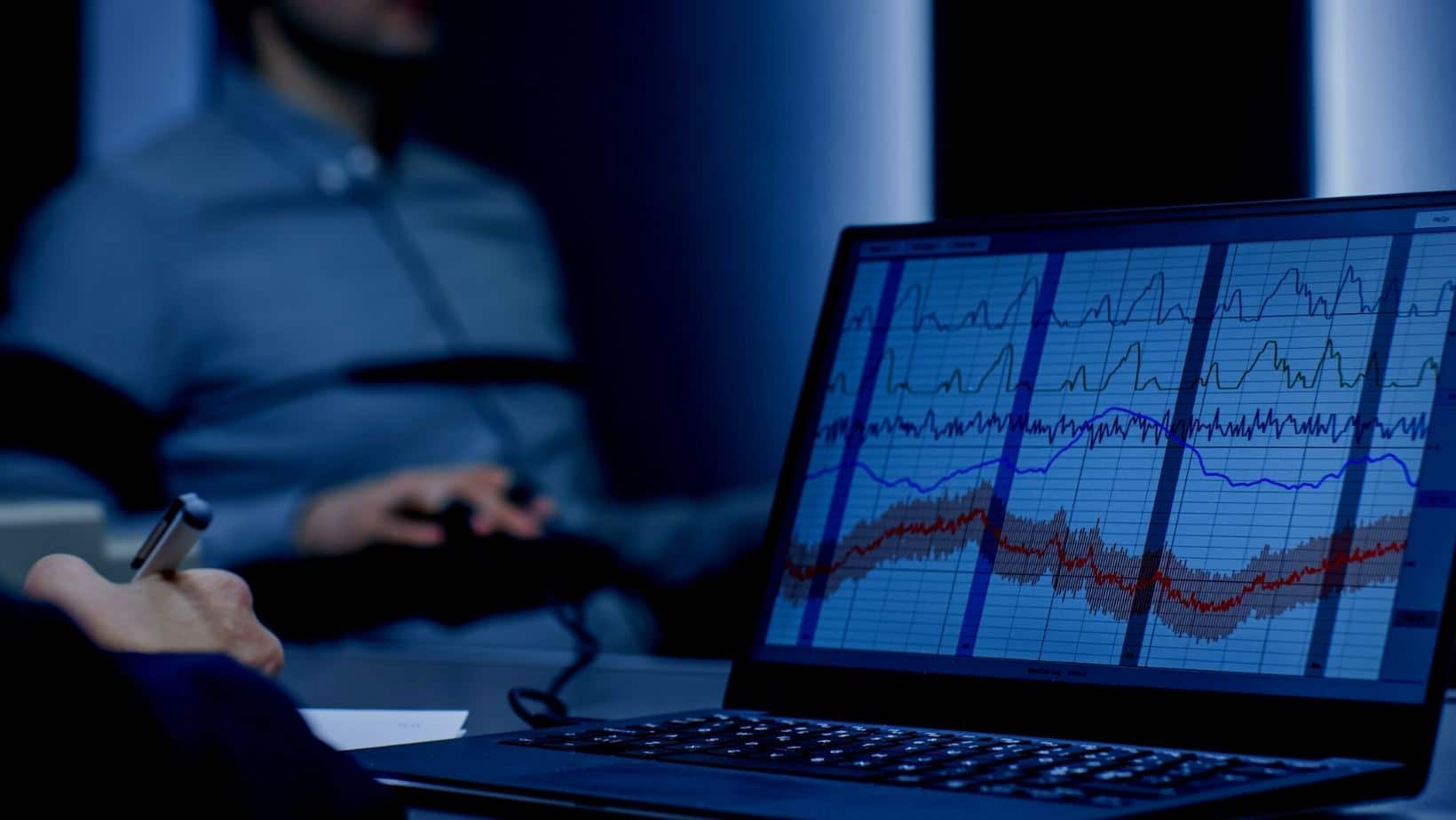
A polygraph examination — commonly known as a lie detector test — is a psychophysiological assessment that measures involuntary physiological responses while a person answers a series of questions. Modern digital polygraph instruments simultaneously monitor five channels: thoracic respiration, abdominal respiration, electrodermal activity (skin conductance), cardiovascular activity (blood pressure and pulse), and peripheral vasomotor responses.
When administered by a qualified, APA-accredited examiner using validated protocols, polygraph testing achieves 90–95% accuracy in specific-issue testing — supported by decades of peer-reviewed research. The polygraph remains the only scientifically validated technology for truth verification; alternatives such as voice stress analysers, mobile apps, and eye-tracking tools have not been validated by independent research.
A typical examination takes 90 minutes to 2 hours. This includes a pre-test interview (30–45 minutes) where every question is discussed and agreed in advance, the polygraph examination itself where questions are repeated a minimum of three times for accuracy, and a post-test review. A detailed written report with methodology, results, and professional conclusions is provided on the same day.
Accuracy & Methodology
The science behind professional polygraph examinations
90–95%
Accuracy Rate
Peer-reviewed research supports 90–95% accuracy in specific-issue testing
3×
Question Repetition
Every relevant question repeated minimum three times to eliminate anomalies
The polygraph is the only scientifically validated truth verification technology
Why Examiner Accreditation Matters
Choosing the right examiner is the single most important decision in polygraph testing.
The accuracy of a polygraph examination depends almost entirely on the skill, training, and ethical standards of the examiner. An unqualified examiner can produce unreliable results that are worthless — or worse, harmful — in legal, personal, or professional contexts. Accreditation is the only way to ensure your examination meets professional standards.
APA
American Polygraph Association
The gold standard. Requires APA-accredited training, strict ethical standards, and ongoing continuing education.
BPS
British Polygraph Society
UK's professional body. Rigorous training and ethical requirements aligned with European standards.
EPA
European Polygraph Association
Sets standards across Europe for methodology, training, and quality assurance in psychophysiological detection.
Red Flags: What to Avoid
No professional membership
No APA, BPS, or EPA affiliation means no verified training or ethical oversight.
Non-accredited training
Short or online-only courses don't meet APA standards. Legitimate training requires 400+ hours.
Unvalidated technology
Voice stress analysers, apps, and eye-tracking are not scientifically validated.
No written report
Professional examiners always provide a detailed written report. Verbal-only results are a red flag.
Kansas generally excludes polygraph evidence in criminal proceedings. Stipulated results may be considered in limited circumstances. Polygraphs are used in probation compliance and sex offender management programs.
Workplace Polygraph Law (EPPA)
Federal EPPA applies to private employers. Kansas does not have a state polygraph examiner licensing board. Law enforcement agencies use polygraph for pre-employment screening.
No examiners operating in Kansas? There's an opportunity.
Kansas currently has no polygraph testing locations in our network — which means there is genuine demand for qualified examiners in the state. Qualified examiners work across law enforcement, legal defence, corporate investigations, and private practice — with starting salaries typically ranging from $30,000 to $60,000+.
Training Requirements at a Glance
400+
Hours Required
APA minimum for basic examiner course
10–17
Weeks Duration
Full-time intensive programme
~$6,000
Average Tuition
Varies by school & programme
10–25
Supervised Exams
Post-graduation internship requirement
Path to Certification
1
Complete APA-Accredited Training
Enroll in a 400+ hour programme. Covers polygraph science, instrumentation, question construction, data analysis, ethics, and 80+ hours of supervised practice.
2
Supervised Internship
Complete 10–25 supervised examinations under an experienced examiner, typically lasting 6–12 months.
3
State Licensing
Many states require a licence. Exams typically include a written test and a practical examination.
4
Professional Membership
Join the APA or relevant state association. Full APA membership requires 200+ completed examinations.
Common questions about polygraph testing for Kansas residents.
Can I get a lie detector test in Kansas?▼
We do not currently have testing locations in Kansas. The nearest available location is our Kansas City office in Missouri, approximately 2.8 miles away. View details →
Are polygraph results admissible in Kansas courts?▼
Kansas generally excludes polygraph evidence in criminal proceedings. Stipulated results may be considered in limited circumstances. Polygraphs are used in probation compliance and sex offender management programs. For detailed information, see our admissibility guide.
What does a polygraph test involve?▼
A polygraph examination lasts 90 minutes to 2 hours. It includes a pre-test interview where questions are discussed and agreed, the examination itself with questions repeated minimum 3 times, and a post-test review. Five physiological channels are monitored throughout. A detailed written report is provided same-day.
How much does a lie detector test cost?▼
Prices across our network range from $450 to $2,100 depending on location. All prices are all-inclusive — covering the booking fee, examination, pre-test assessment, and detailed written report. Only a $100 deposit is required to book. Visit our pricing page for location-specific prices.
Do you plan to open locations in Kansas?▼
We are continuously expanding our network. If you would like to be notified when we open locations in Kansas, please contact us with your details.
What are the polygraph licensing requirements in Kansas?▼
Federal EPPA applies to private employers. Kansas does not have a state polygraph examiner licensing board. Law enforcement agencies use polygraph for pre-employment screening. Requirements for polygraph examiners vary by state. The American Polygraph Association (APA) sets the national standard for examiner certification, training, and ethical conduct.
Need a Lie Detector Test Near Kansas?
We may be able to arrange a certified examiner near you. Call our free helpline or contact us online — confidential, no obligation.